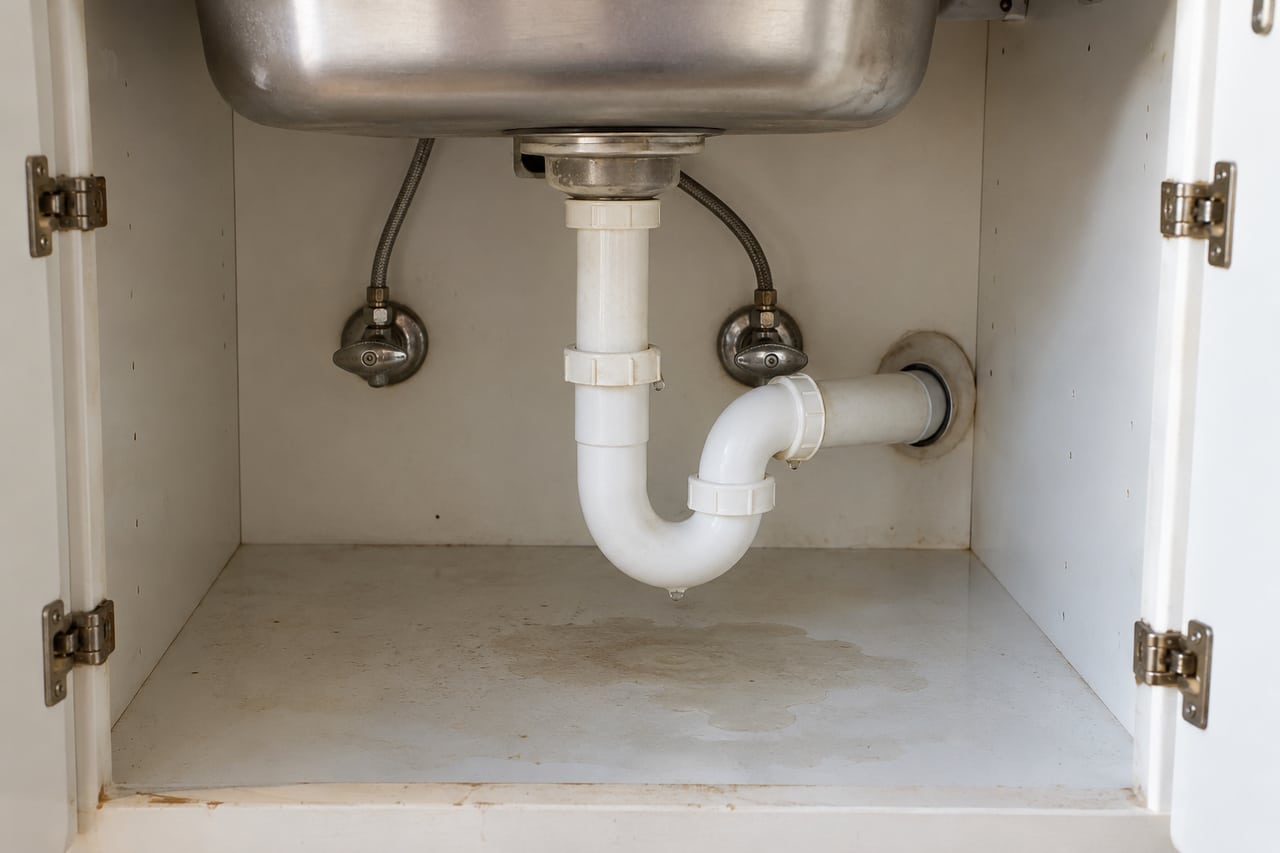
Does a damp cabinet or wall prove there is a leaking supply pipe?
No. Describe the wet area without choosing a cause. A plumbing connection, a drain, condensation or water entering from elsewhere may need a different kind of inspection. The useful first step is to establish when the moisture appears and what is nearby.
Start with what you can safely see
Keep a record of the affected surface: cabinet base, wall finish, ceiling or flooring. A picture taken from the same safe position on different days is easier to compare than several close-ups without context. Include the room and the date in your notes. Do not reach into a wet cabinet near a disposal, outlet or other electrical equipment.
Think back to when you first noticed the mark. Was a sink or appliance being used? Had it rained? Was the property empty? Those observations give an inspection a starting point. They do not prove that the fixture nearest the stain caused it. Avoid running water just to recreate a leak that is already causing damage.
Decide what the inspection should answer
Tell us whether you can see water escaping or only a stain left behind. If a drip is visible at a connection, describe that exact place. If the water source remains hidden, ask what parts of the plumbing and surrounding space need checking before anyone proposes opening a finish.
Ask how the findings will separate a confirmed source from an area that still needs investigation. A photo of wet drywall shows a condition. It is not a pipe layout, a repair design or proof that the rest of the wall is dry.
- Which room and surface are affected?
- What happened before the dampness appeared?
- What can be inspected without moving fixtures or opening finishes?
- Who can authorize further access if the source is still unclear?
Keep access and repair decisions separate
Before approving an opening, identify who will make it, what part of the finish may be removed and who is expected to put it back. Leak detection, pipe repair, drying, cabinet work and repainting may be separate items. Compare those items in the scope rather than assuming the word repair covers the entire room.
If the property is rented, report the moisture to the owner or manager and arrange permission for entry and work. EPA advises renters to report plumbing leaks and moisture problems to their building owner or manager. A visitor to the home should not approve removal of someone else’s cabinets.
U.S. Environmental Protection Agency
After a source is identified
Keep the location and the repair recommendation together. Ask what remains untested and whether the proposed work addresses the source, the wet materials, or both. An end to dripping does not by itself document the condition of the surrounding finishes.
For an FPUA account with unexplained consumption as well as a stain, bring the usage dates to the conversation. The utility’s customer guidance identifies several possible places for water loss; a high bill alone does not choose one. Use our high water bill page when the meter history is the main evidence.
Fort Pierce Utilities Authority
Questions about this work
Should I remove the wet baseboard to look behind it?
Discuss the reason for access and the condition of the area first. Avoid disturbing suspected mold, electrical hazards or a finish you do not have permission to remove.
Can I book only a check of the source?
Ask whether diagnosis-only work is accepted, what it includes and what it costs. Confirm separately whether repair, drying or finish work is available.
U.S. Environmental Protection AgencyFort Pierce Utilities Authoritywww.cdc.gov