Can a stain below another unit identify who is responsible?
No. The stain identifies the place where the condition is visible. The source, pipe ownership and responsibility need separate investigation and review by the appropriate people.
What to establish first
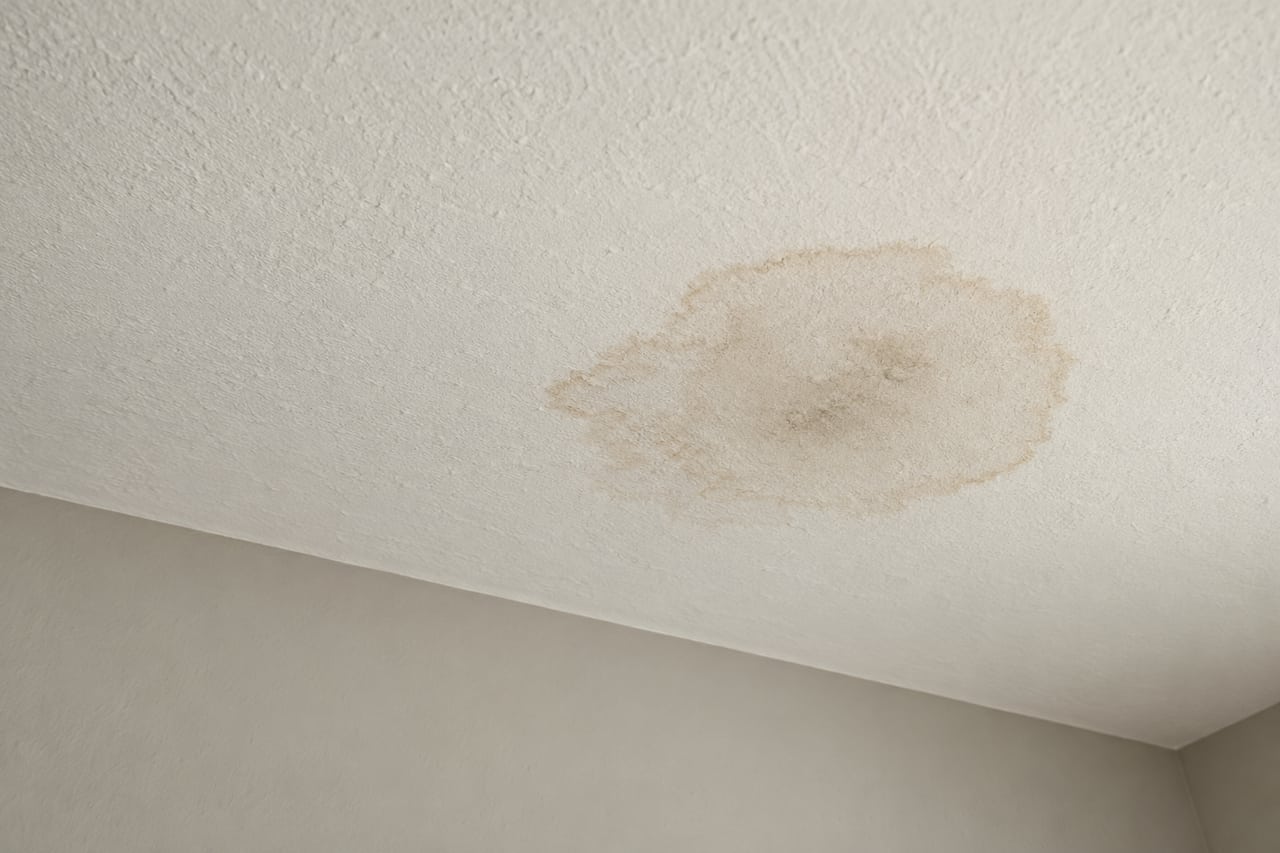
Report the room, floor and unit number to building management. Say whether water is dripping now, the mark is changing or the concern is an older stain. Include a photo from a safe position that shows the location within the room.
Do not go into another unit, open a service hatch or remove part of the ceiling on your own. If the ceiling sags or water is near a light fitting, keep people out of that area and seek appropriate help. A photograph should never require standing under damaged material.
Agree the inspection scope
Ask who can arrange access to any other space the inspection may need. The upstairs unit, a shared service area and your own room may require different permissions. Decide how a finding will be reported without speculating about a neighbor’s responsibility.
If the inspection can only cover the visible room, have that limit recorded. It should not become a conclusion about plumbing that was not accessible. Ask what additional access or information would be needed to resolve the source.
Local checks and the next decision
For the island address, identify the water supplier from the account or management records. St. Lucie County’s North Hutchinson Island report and FPUA’s water information show why the island name alone is not an account identifier. Keep the utility question distinct from control of plumbing inside the building.
Separate the source from ceiling work
Agree how the suspected source will be addressed before approving a cosmetic ceiling repair. EPA’s moisture guidance emphasizes fixing the water problem; a new finish alone does not document that work. Ask who will assess affected materials and what remains outside the detection scope.
U.S. Environmental Protection Agency
St. Lucie CountyFort Pierce Utilities AuthorityU.S. Environmental Protection Agencywww.cdc.gov